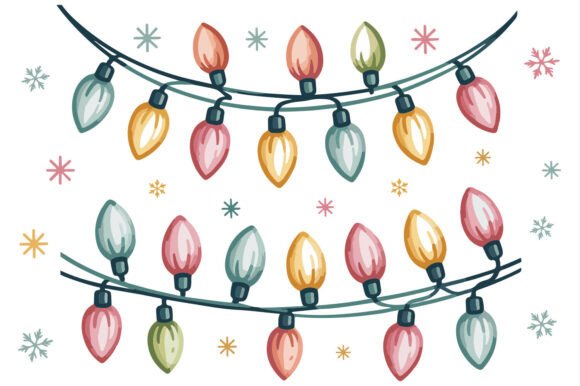
Watercolor Christmas Lights: An Embroidered Holiday Mood
When you open the Watercolor Christmas Lights Illustration, the first thing you notice isn't a rigid technical drawing, but a feeling. It feels festive, soft, and nostalgic. This isn't a graphic meant for stark precision; it’s a mood captured in shapes. The flowing lines and organic color blocks suggest a hand-painted charm, which is exactly the personality you want to translate into thread. For embroidery, especially on things like cozy sweatshirts or welcoming pillow covers, this softness is a gift. It promises a finished product that feels handmade and special, not mass-produced.
The Natural Project Fit: Where This Design Belongs
This illustration has a gentle, expansive layout. It’s not a cramped, tiny icon. That tells me it’s destined for a medium to larger hoop. My mind immediately goes to a holiday-themed tote bag for a craft fair or a custom embroidered throw pillow for a boutique. The design's composition has enough breathing room that it would shine on an apron or a kitchen towel, becoming a cheerful accent rather than a crowded logo. For baby items—like a holiday-themed bib or a nursery decor piece—the gentle watercolor aesthetic is perfect; it’s sweet without being overpowering. It feels like a design for products meant to be seen and appreciated, not just worn.
Stitching the Watercolor Effect: Practical Execution Notes
The real test of any embroidery file is how its artistic style survives the conversion to stitches. Here, the "watercolor" look is key. In practice, this means areas of blended color. For machine embroidery, this will likely translate into fill stitches with thoughtful color transitions. You’ll want to test this on scrap fabric first. Check how the stitch density handles those softer edges. Does it look smooth or choppy? A good stabilizer choice is crucial here, especially if you plan to stitch it on a textured fabric like a sweater or a canvas tote, where the fill stitches need a solid foundation to look clean.
The level of detail feels intentional—not overly fussy. This is a relief. It means you probably won’t be battling tiny, thread-breaking details on curves, like on a cap. However, I would be cautious about shrinking this design down too much for a small hoop. Those lovely color blends might lose their definition and become muddy. This design asks for space to breathe. On dark fabric, thread color contrast becomes paramount. You’d need to run a black-and-white mockup to see how the light and dark areas of the original illustration translate, and likely plan for a bolder color palette to maintain that festive pop.
A Real Scenario: Crafting a Boutique Holiday Tote
Let’s walk through a real use case. Imagine you’re preparing a limited-run holiday tote bag for your small shop. You want it to feel premium, giftable, and distinctly handmade. The Watercolor Christmas Lights Illustration hits those notes. Its aesthetic elevates the product from a simple bag to a seasonal keepsake. When a customer sees it, the embroidered version of that soft artwork reinforces trust in your craftsmanship. It looks deliberate and artistic, not randomly selected. For your brand, if your vibe is warmth and artistry, this design aligns perfectly. It’s not a generic snowflake; it’s a recognizable, charming scene.
In execution, you'd hoop your bag fabric securely, mindful of any curvature. You'd select threads that mirror that watercolor lightness—perhaps not stark primaries, but slightly muted, blended tones. You'd watch how the satin stitches or running stitches (depending on the file's construction) handle the wire and bulb outlines. The final result should feel cohesive; the illustration shouldn’t look "fighting" with the embroidery technique but embracing it. That’s the mark of a well-suited design.
Careful Applications and Commercial Considerations
While this design is versatile, it has natural limits. On very stretchy fabric or thin materials without proper stabilizer, those fill stitch areas could pose a challenge, potentially distorting the fabric. Layered garments, like a jacket, need extra planning for stitch penetration and finish. And for products destined for frequent washing—like baby clothes or kitchen linens—you’d want to ensure the stitch density is robust enough to withstand wear without fraying, which again comes back to testing on a similar scrap first.
Speaking to my fellow makers and Etsy sellers: this kind of artwork clearly falls into the Illustrations and Graphics category. That means you must confirm the licensing terms before selling your finished embroidered products or using the design in digital product previews. Is it for personal use only, or does it include commercial use? Never assume. That step is critical for protecting your craft business. Once cleared, this design becomes a valuable commercial embroidery asset. It can be used across a line of holiday products—from embroidered patches to applique designs on sweatshirts—creating a consistent, professional brand collection for the season.
The Final Impression: Why This Design Adds Value
Beyond the technical fit, the Watercolor Christmas Lights Illustration affects the perceived value of your work. For a personalized gift, it feels thoughtfully chosen. For a small shop merchandise item, it enhances your handmade presentation. It engages buyers because it’s visually appealing and tells a story—of festive lights, warm memories, holiday cheer. In a crowded market, that distinct personality helps your product stand out.
My practical advice is to always treat a new embroidery file like this as a partner in your process. Test it. Respect its strengths—like its mood and layout—and understand its boundaries, like its need for a decent hoop size and stable fabric. Match your thread colors carefully to preserve its watercolor soul. When you do, you’ll transform a digital graphic into a tangible, beautiful finished product that truly captures the holiday spirit, stitch by stitch.